Draw Bench Conveyor Chains for High-Tension Pulling Systems
Reference-size and drawing-based draw bench chains, matched sprockets, pins and side bars for tube, bar and profile drawing equipment.
Draw Bench Chain Systems & Matched Components
Choose a reference size, then confirm the final chain, sprocket and connection geometry against your drawing or sample.
Chain Components
Pins, plates, bushes, connecting elements and maintenance spares tied to approved chain drawings.
Explore series →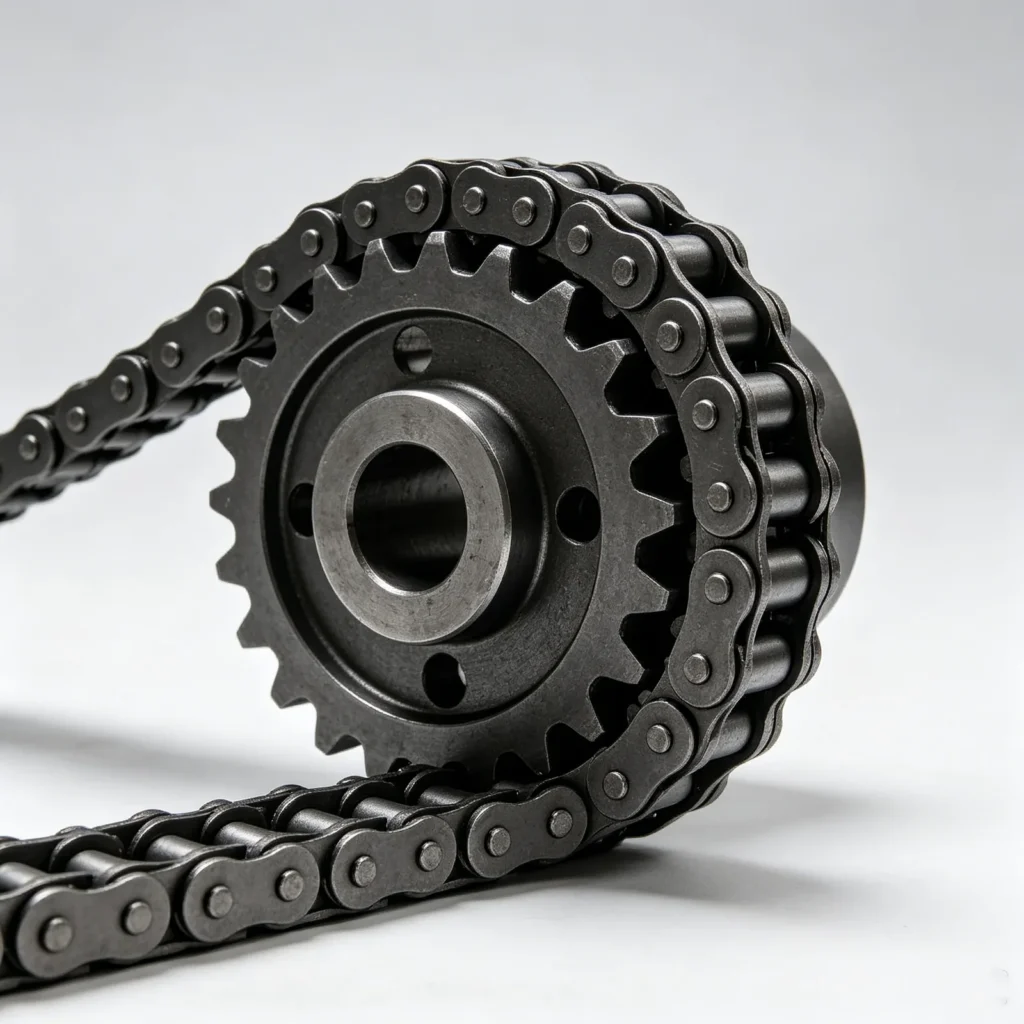
Draw Bench Chain Accessories
Matched sprockets, pins, side bars and terminal safety-chain sections for draw bench chain systems.
Explore series →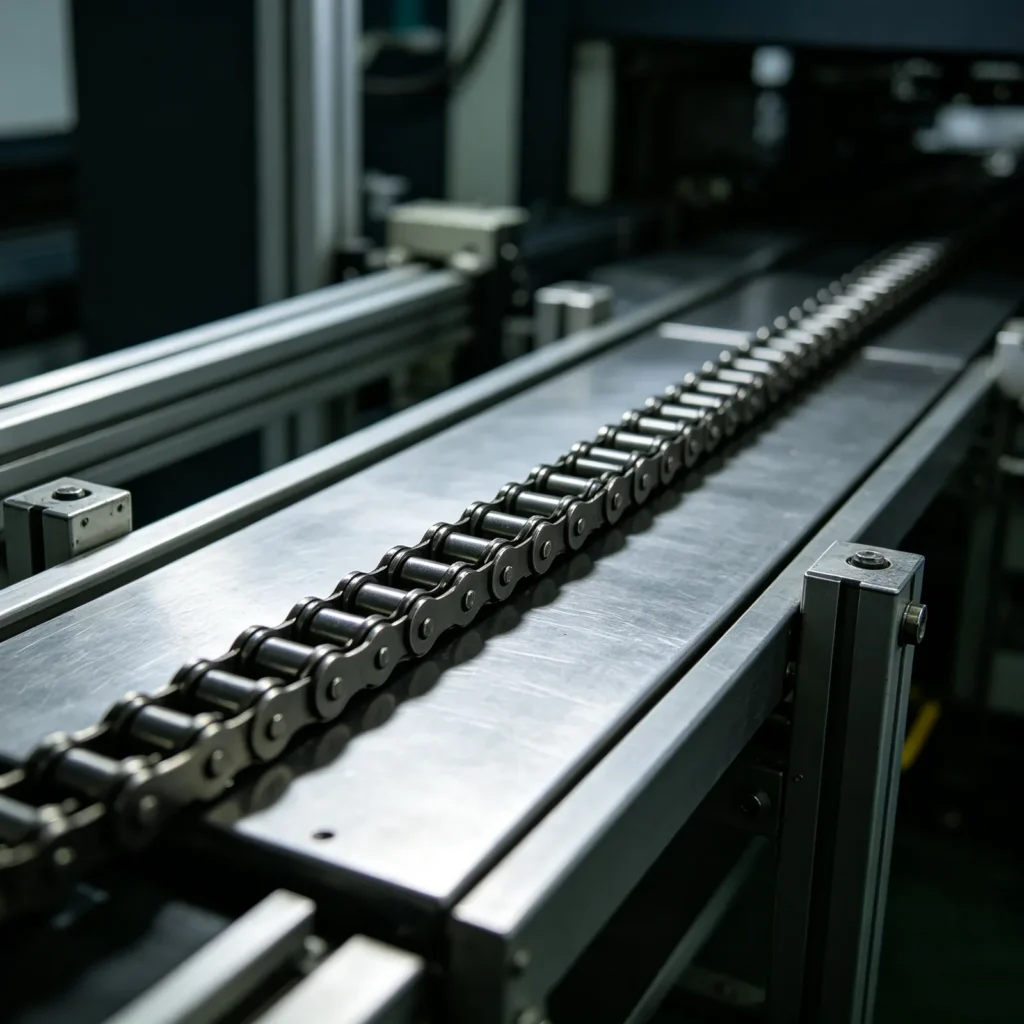
Draw Bench Chains
Engineered high-tension chain solutions for metal draw benches, including bar-and-pin and multiple-leaf configurations.
Explore series →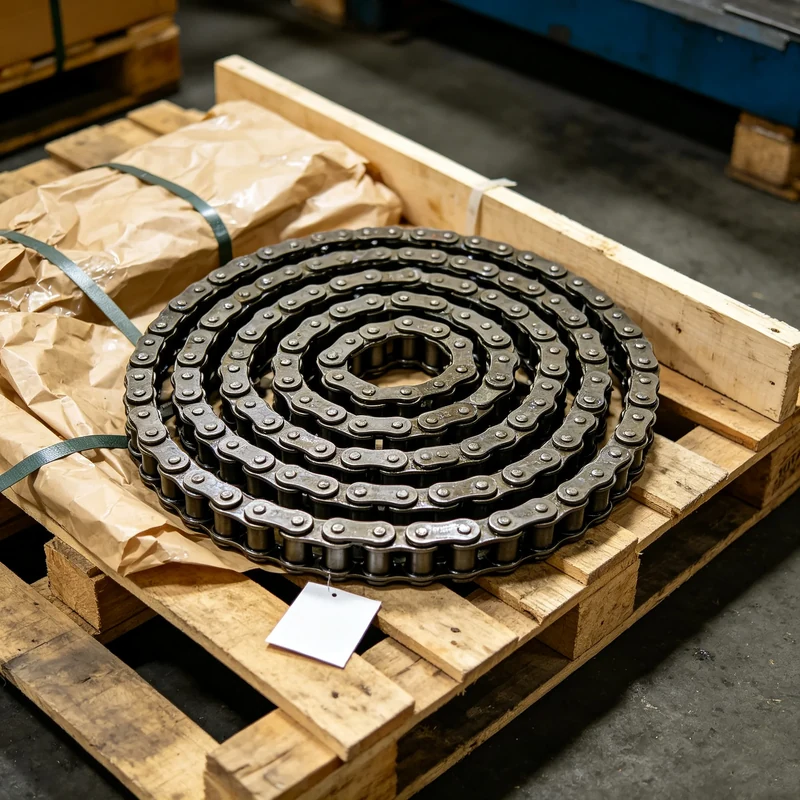
Draw Bench Conveyor Chains
Primary draw-bench chain family for drawing-based new-build and replacement projects.
Explore series →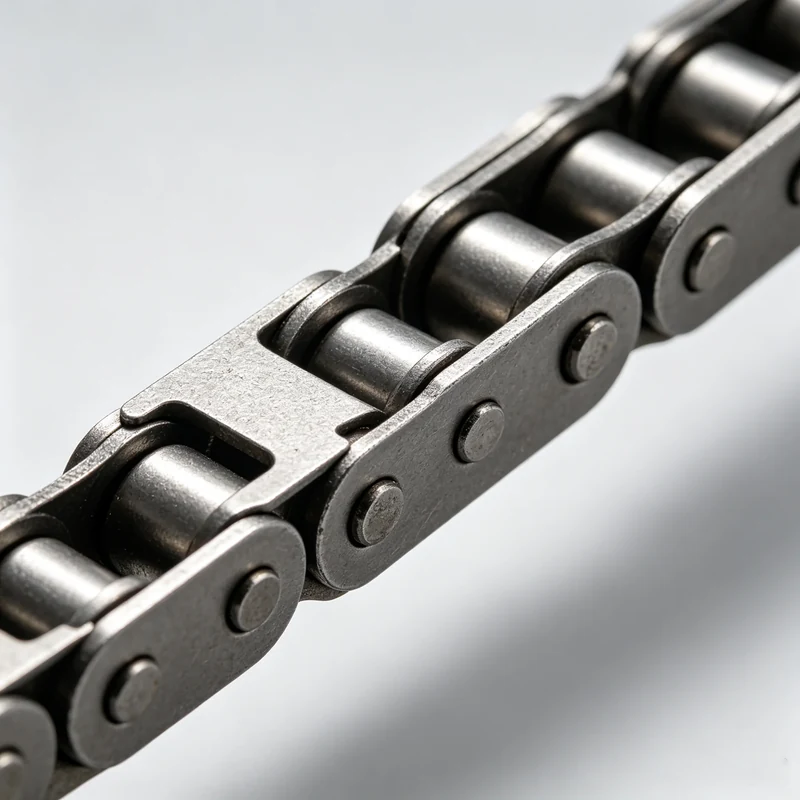
Related Conveyor Chain Configurations
Related conveyor-chain configurations documented by the supplied media set.
Explore series →Sprockets & Accessories
Matched sprocket and chain-interface components for draw bench systems.
Explore series →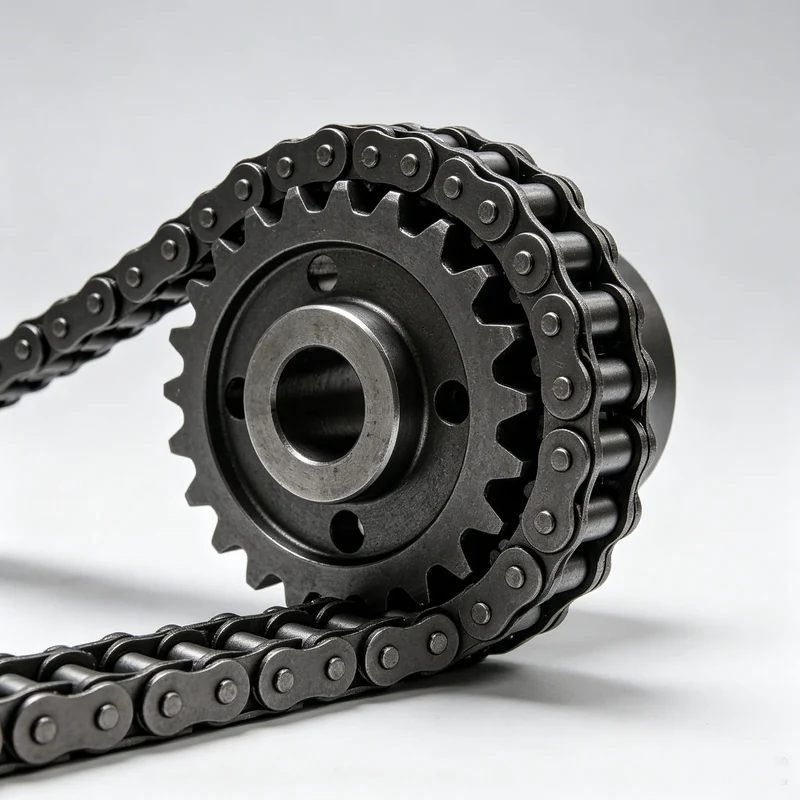
Sprockets And Components
Chain sprocket assemblies and replacement components requiring geometry confirmation.
Explore series →Built Around High-Tension, Slow-Speed Drawing Duty
High Load Path
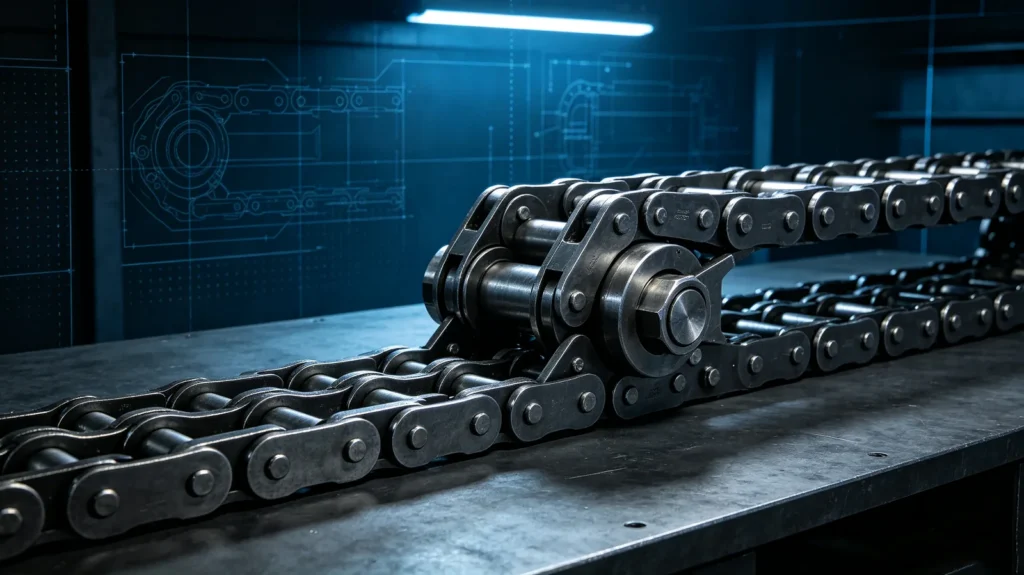
Draw bench chains are selected around pulling load, shock, pitch, bearing area and mating sprocket geometry rather than generic conveyor duty.
Drawing-Controlled Fit
Pitch, pin fit, link profile, strand layout and terminal connection are checked against the approved machine interface.
Wear-Critical Components
Material, heat treatment, pin surface and lubrication strategy are matched to the wear mechanism and duty cycle.
Chain + Sprocket Matching
Matched sprockets help reduce abnormal engagement, edge loading and premature wear in high-tension service.
Metal Drawing & Mill Handling
- Tube and pipe draw benches
- Bar, rod and profile drawing lines
- Mandrel insertion and extraction systems
- Equipment rebuilds requiring chain-and-sprocket matching
- Slow-speed, high-tension sliding or drag duties in metal processing
How a Draw Bench Chain Transmits Pull
Configuration Options We Confirm Before Release
Common Draw Bench Chain Interchange Envelope
Market reference range across the listed 1413A–4298A sizes. Final product specifications are drawing-controlled.
| Parameter | Reference Range | Selection Note |
|---|---|---|
| Pitch A | 3.000–9.750 in | Must match chain/sprocket geometry |
| Inner width max B | 0.813–9.120 in | Varies strongly with chain construction |
| Average ultimate strength | 83,000–1,500,000 lb | Not the same as recommended working load |
| Reference weight | 7.00–134.00 lb/ft | Useful for handling and system calculations |
What to Send for a Reliable Match
- Identify the existing chain: model, pitch, strand arrangement and overall length.
- Define the load: bench tonnage/pull, speed, duty cycle and shock conditions.
- Verify the interfaces: mating sprocket, carriage/end connection and take-up.
- Confirm environment: lubrication, scale/contamination, temperature and corrosion exposure.
- Approve the drawing: release production only after critical dimensions are checked.
Common Model Numbers We Can Review
1413A · 1445A · 1416P · 1418B · 1465AR · 1439AR · 1395AR · 4198A · 4298A
Model and brand references are used only to identify dimensions or legacy equipment. Ever-power is not claiming affiliation with the original manufacturers. Always confirm the actual drawing.
From Pre-Sales Review to Replacement Planning
Pre-Sales
Reference-model review, required data checklist and initial feasibility screening.
Technical
Drawing review, dimension cross-check, chain/sprocket matching and application questions.
Design / Customization
Drawing-based chain length, link geometry, terminal connection and matched component configuration.
After-Sales
Installation checks, maintenance guidance and replacement-part identification from order records.