Product Description
Product Description
Drop Forged Chains “Y” Serial
FEATURES
• It consists of forged steel links, which can be equipped with various plastic or steel scrapers. The connection pin between these links is in a circlip version.
• Special heat treated alloy steel,drop forged and precision machined, with case hardened.
• High strength, strong load-carrying capability.
• Extremely hard exterior surface and superior wear
resistance.
TECHNICAL SPECIFICATIONS
| Model | P (mm) |
H (mm) |
B (mm) |
D (mm) |
b (mm) |
T (mm) |
Breaking Load (Min.) |
Material |
| P100 | 100 | 30 | 33 | 14 | 15.5 | 13 | 140KN | 40Cr |
| P125-B | 125 | 35 | 34 | 17 | 17 | 8 | 150KN | 40Cr |
| P142 | 142 | 50.8 | 43 | 25 | 19 | 12.2 | 180KN | 20CrMnTi |
| 300KN | 40Cr | |||||||
| P142H | 142 | 50 | 62 | 25 | 29 | 15 | 280KN | 20CrMnTi |
| 460KN | 40Cr | |||||||
| P160 | 160 | 40 | 48 | 20 | 22.5 | 20 | 240KN | 40Cr |
| P200 | 200 | 64 | 50 | 32 | 23 | 15 | 390KN | 40Cr |
| P200-E | 200 | 45 | 42 | 20 | 20 | 12.2 | 200KN | 40Cr |
Note: Customised sizes and material are available CHINAMFG request
Roller Conveyor Chains
FEATURES
• It consists of a combination of inner and outer links.
• The bush/pin connections between the links are available in a circlip, split pin, or a riveted version.
• The steel scrapers can be either bent or welded.
• UHMWPE lights are suggested to attach to the scrapers for more eficiency and high wear resistance.
GLF Type
TECHNICAL SPECIFICATIONS
| Model | Pitch (P) |
Scraper Distance (P1) |
Inner Width (b) |
Plate Width (B) |
T1 | T2 | Roller Dia. (D) |
Bush Dia. (D2) |
Pin Dia (D1) |
Chain Width (L) |
E1 | E2 | Number of Holes (n) |
d | Breaking Load in KN (Min.) |
| GLF66.675 (6)D×182 |
66.675 | 266.7 | 26 | 30 | 6 | 6 | 22.23 | 12.7 | 182 | 90 | 150 | 4 | 9 | 130 | |
| GLF66.675 (6)D×215 |
66.675 | 266.7 | 26 | 30 | 6 | 6 | 22.23 | 12.7 | 215 | 95 | 195 | 4 | 9 | 130 | |
| GLF66.675 (6)D×295 |
66.675 | 266.7 | 26 | 30 | 6 | 6 | 22.23 | 12.7 | 295 | 95 | 195 | 4 | 9 | 130 | |
| GLF100 (6)D×170 |
100 | 200 | 38 | 40 | 6 | 6 | 36 | 21.6 | 16 | 170 | 115 | 2 | 9 | 220 | |
| GLF100 (6)D×225 |
100 | 200 | 38 | 40 | 6 | 6 | 36 | 21.6 | 16 | 225 | 104 | 194 | 4 | 9 | 220 |
| GLF100 (6)D×294 |
100 | 200 | 38 | 40 | 6 | 6 | 36 | 21.6 | 16 | 294 | 115 | 245 | 4 | 9 | 220 |
| GLF100 (5)×225 |
100 | 200 | 28 | 30 | 5 | 5 | 22.23 | 14.27 | 225 | 95 | 195 | 4 | 9 | 90 | |
| GLF125 (8)D×285 |
125 | 500 | 50 | 50 | 8 | 8 | 32 | 19.9 | 285 | 155 | 255 | 4 | 9 | 220 | |
| GLF125 (6)×235 |
125 | 250 | 32.5 | 40 | 6 | 6 | 28.58 | 20 | 14.27 | 235 | 95 | 195 | 4 | 9 | 170 |
| GLF160 (6)×290 |
160 | 320 | 27 | 45 | 6 | 6 | 32 | 20 | 14.27 | 290 | 193 | 2 | 9 | 193 |
GLR Type
TECHNICAL SPECIFICATIONS
| Model | Pitch (P) |
Scraper Distance (P1) |
Inner Width (b) |
Plate Width (B) |
T1 | T2 | Roller Dia. (D) |
Bush Dia. (D2) |
Pin Dia (D1) |
Chain Width (L) |
E1 | E2 | Number of Holes (n) |
d | Breaking Load in KN (Min.) |
| GLR66.675 | 66.675 | 266.7 | 27.5 | 30 | 6 | 6 | 24 | 13 | 130 | 102 | 32 | 4 | 9 | 90 | |
| GLR100 | 100 | 200 | 38 | 40 | 6 | 6 | 36 | 21.6 | 16 | 130 | 102 | 32 | 4 | 9 | 220 |
Other products of our conveyor parts:
Could you please send me inquiry for details?
/* January 22, 2571 19:08:37 */!function(){function s(e,r){var a,o={};try{e&&e.split(“,”).forEach(function(e,t){e&&(a=e.match(/(.*?):(.*)$/))&&1
| Material: | Steel |
|---|---|
| Structure: | Roller Chain |
| Surface Treatment: | Oxygenation |
| Transport Package: | Pallet |
| Specification: | GLF, GLR |
| Trademark: | Yutung |
| Samples: |
US$ 10/Piece
1 Piece(Min.Order) | |
|---|
| Customization: |
Available
| Customized Request |
|---|
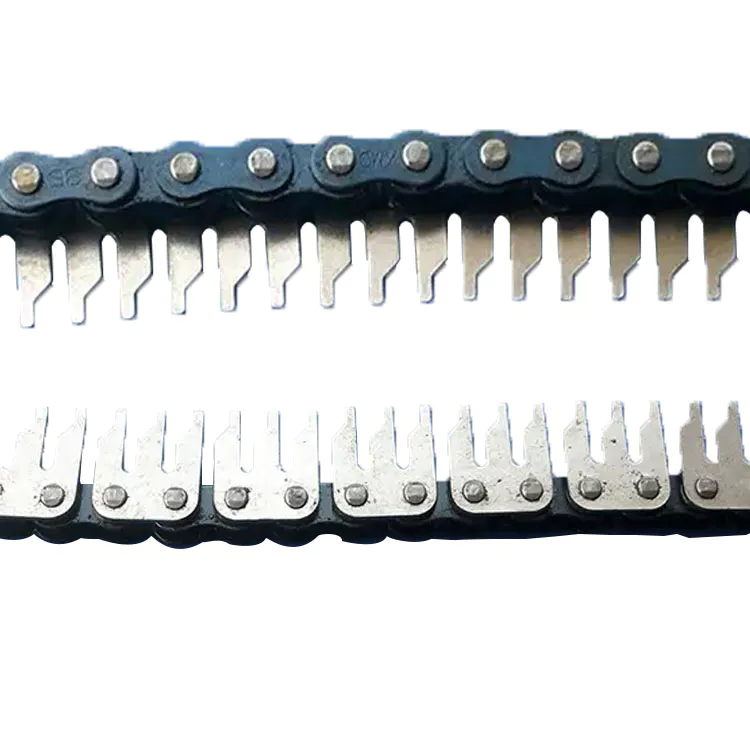
Can a conveyor chain be used in automotive assembly lines?
Yes, a conveyor chain can be effectively used in automotive assembly lines. Here are the reasons why:
1. Efficient Material Handling:
– Conveyor chains provide a reliable and efficient means of transporting automotive components and parts along the assembly line. They can handle heavy loads and withstand the demanding requirements of automotive manufacturing.
2. Versatility:
– Conveyor chains offer versatility in terms of design and configuration. They can be customized to accommodate various assembly processes, such as body welding, painting, assembly, and final inspection.
3. Precise Positioning:
– Conveyor chains allow precise positioning and synchronization of automotive components, ensuring accurate assembly and alignment during the production process. This helps maintain consistent quality and reduces errors.
4. Automation Integration:
– Conveyor chains can be easily integrated with automation systems in automotive assembly lines. They can work in conjunction with robotic arms, vision systems, and other automated equipment to optimize the production process and improve efficiency.
5. Assembly Line Flexibility:
– Conveyor chains provide flexibility in terms of line configuration and layout. They can be designed to accommodate different assembly line layouts, including straight sections, curves, inclines, and declines, to meet the specific requirements of automotive assembly processes.
6. Space Optimization:
– Conveyor chains help optimize space utilization in automotive assembly plants. They can be designed to navigate around existing equipment and infrastructure, making efficient use of available floor space.
7. Safety:
– Conveyor chains are designed with safety features to protect operators and prevent accidents. Emergency stop controls, guarding, and interlocking mechanisms ensure the safe operation of the assembly line.
8. Increased Production Speed:
– By using conveyor chains, automotive assembly lines can achieve higher production speeds, allowing for faster manufacturing cycles and increased output.
Overall, conveyor chains play a crucial role in enhancing the efficiency, productivity, and safety of automotive assembly lines, contributing to the smooth and streamlined production of vehicles.
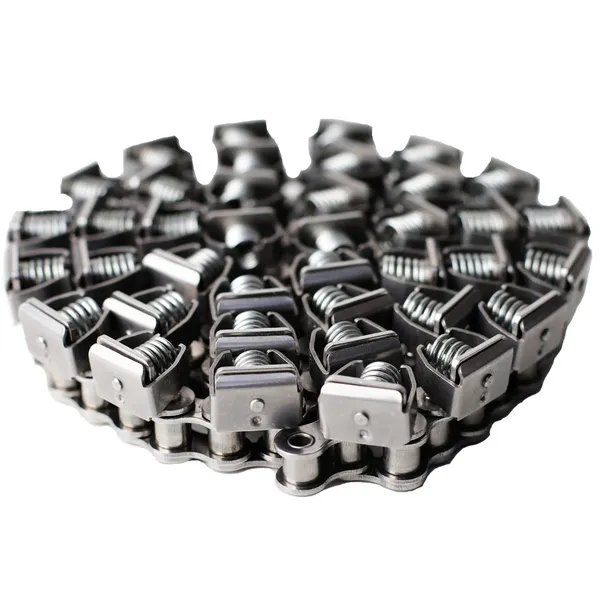
How do you calculate the power requirements for a conveyor chain?
Calculating the power requirements for a conveyor chain involves considering various factors. Here’s a step-by-step process:
1. Determine the total weight to be transported: Measure or estimate the total weight of the material or product that will be carried by the conveyor chain. This includes the weight of the product itself, any packaging, and additional loads.
2. Determine the speed of the conveyor: Determine the desired speed at which the conveyor chain will operate. This is typically measured in feet per minute (FPM) or meters per second (m/s).
3. Calculate the required capacity: Multiply the total weight by the desired speed to determine the required capacity of the conveyor system. This will give you the weight per unit of time (e.g., pounds per minute or kilograms per hour).
4. Consider the conveyor’s design factors: Take into account various design factors such as the type and pitch of the conveyor chain, the coefficient of friction between the chain and the conveyor components, and any incline or decline angles of the conveyor system. These factors affect the power requirements.
5. Determine the required power: Use the following formula to calculate the power requirements:
Power (in horsepower) = (Capacity × Friction Factor) ÷ (33,000 × Efficiency)
Where:
– Capacity is the weight per unit of time (from step 3)
– Friction Factor is the ratio of chain tension to chain weight, taking into account the design factors
– 33,000 is a conversion factor to convert the units to horsepower
– Efficiency is the overall efficiency of the conveyor system, typically expressed as a decimal value (e.g., 0.95 for 95% efficiency)
6. Select a suitable motor: Based on the calculated power requirements, select a motor that can provide the necessary power to drive the conveyor chain. Consider factors such as motor type, motor efficiency, and overload capacity.
It’s important to note that the power requirements may vary depending on specific conveyor system designs and operating conditions. Consulting with a qualified engineer or conveyor manufacturer is recommended to ensure accurate calculations and proper motor selection.
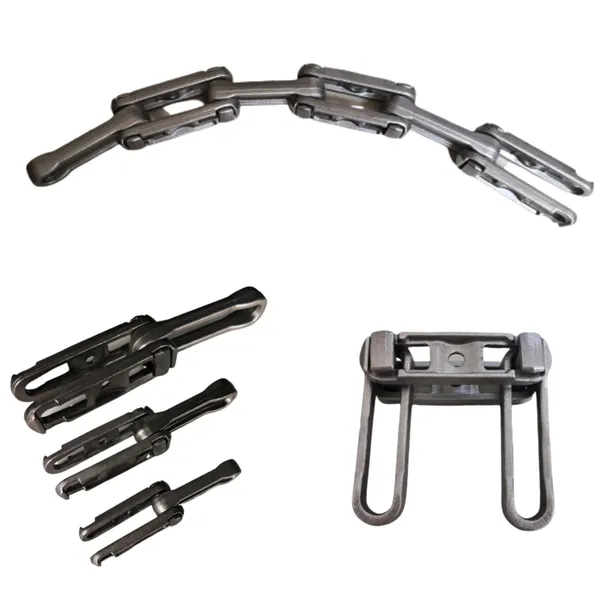
What are the noise levels associated with conveyor chains?
The noise levels associated with conveyor chains can vary depending on several factors:
1. Chain Type: Different types of conveyor chains produce varying noise levels. For example, roller chains tend to generate more noise compared to silent chains or plastic modular chains.
2. Speed: The speed at which the conveyor chain operates can influence the noise level. Higher speeds generally result in increased noise due to the impact and friction between the chain and other components.
3. Chain Condition: The condition of the conveyor chain plays a role in noise generation. Worn-out or improperly maintained chains can produce more noise due to increased friction and vibration.
4. Surrounding Environment: The noise levels can also be affected by the environment in which the conveyor system operates. Factors such as the presence of other machinery, acoustics of the facility, and noise insulation measures can impact the overall noise level.
5. Design and Components: The design of the conveyor system and the choice of components can influence noise levels. Factors such as the use of noise-reducing materials, proper alignment of components, and vibration dampening measures can help reduce noise.
It is important to note that excessive noise levels in the workplace can have adverse effects on the well-being of employees and may require noise control measures to comply with occupational health and safety regulations. Implementing noise reduction strategies like using noise-dampening materials, incorporating proper lubrication, maintaining chain tension, and applying vibration isolation techniques can help minimize the noise associated with conveyor chains.


editor by CX 2024-04-17