Product Description
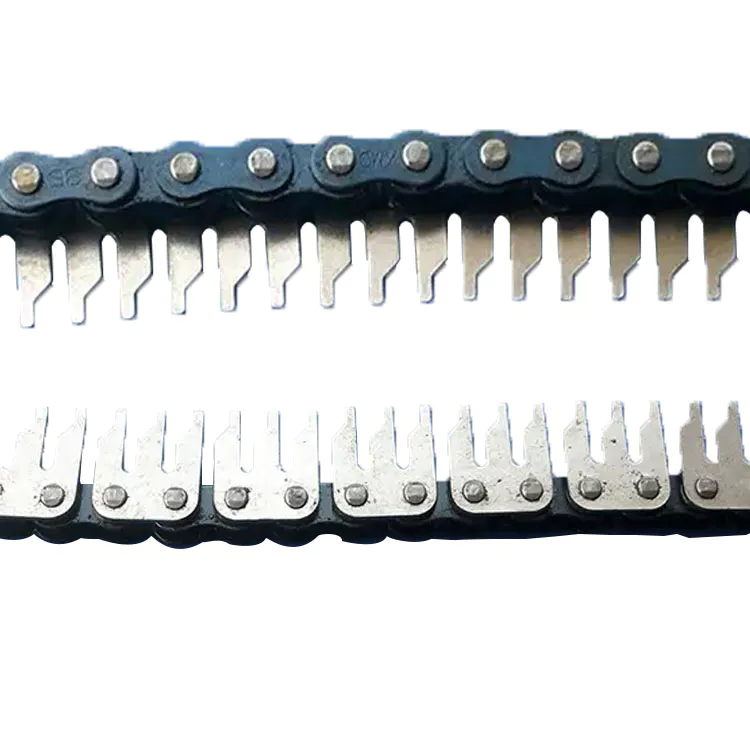
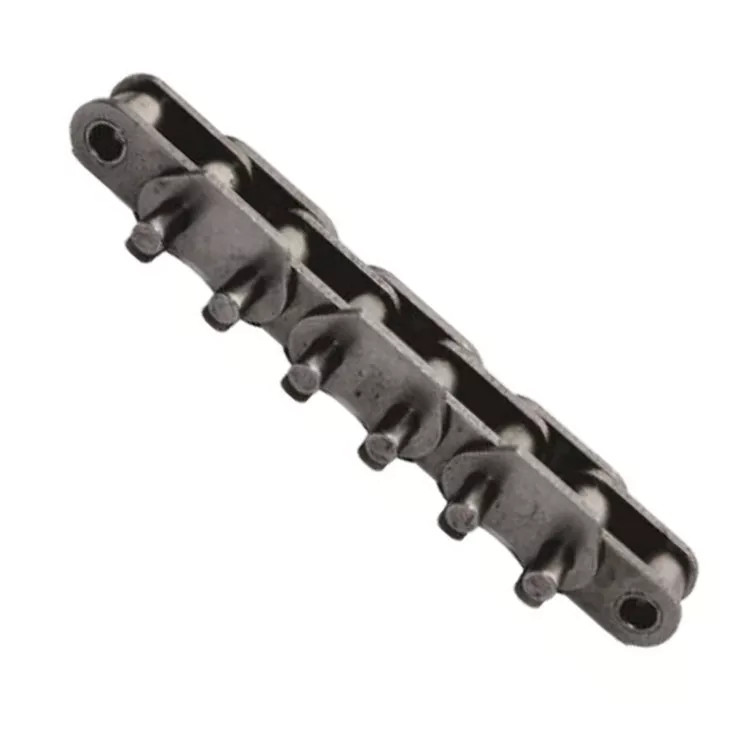
2571 Customized Chain Scraper for Belt Conveyor
Drag chain conveyor is a new product for horizontal (or tilt ≤ 15 °), for conveying of powder, granular, small pieces of material, in the technically advanced level in the country. This product has a reasonable design, novel structure and long service life, making it significantly superior to screw conveyors, buried scraper conveyors and other conveying equipment. It is an ideal new type of conveying equipment.
Fu-type chain conveyors are supplied with 2 kinds of ordinary rubber and plastic belts. Applicable working environment -15 °C -40 °C. When transporting components with acidic and alkaline substances, oil substances and organic solvents, alkali-resistant and acid-proof conveyor belts are used.
Features:
Chain conveyor (FU type)
(1) Reasonable structure, novel design, advanced technology and complete series.
(2) Fully-enclosed casing, good sealing performance, safe operation, and reliable operation.
(3) The chain conveyor chain is made of alloy steel processed by advanced heat treatment methods with long service life and extremely low maintenance rate.
(4) Large conveying capacity, conveying capacity up to 11m3/h.
(5) The transmission energy consumption is low. With the help of the internal friction of the material, the material is driven to pull, saving electricity and durability.
(6) Import and export are flexible. Elevated, ground, pit, level, and climbing (≤ 15°) can be installed. The length of the conveyor can be designed according to the user.
2571 Customized Chain Scraper for Belt Conveyor
Composition:
The chain conveyor is mainly composed of the first section, the middle section, the optional section, the tail section and the conveyor chain, the import and export materials, and the drive. The drive is divided into 2 types: left and right, and the drive type is selected according to the delivery volume and the delivery length. The feed inlet is divided into 3 types: the upper feed inlet, the lateral feed inlet, the 2 feed inlets, the discharge outlet is the head outlet, and the intermediate outlet and the middle outlet are also available for users to use.
/* January 22, 2571 19:08:37 */!function(){function s(e,r){var a,o={};try{e&&e.split(“,”).forEach(function(e,t){e&&(a=e.match(/(.*?):(.*)$/))&&1
| Structure: | Conveyor System |
|---|---|
| Material: | Carbon Steel |
| Material Feature: | Oil Resistant, Heat Resistant, Fire Resistant |
| Application: | Chemical Industry, Grain Transport, Mining Transport, Power Plant |
| Condition: | New |
| Name: | 2020 Customized Chain Scraper for Belt Conveyor |
| Customization: |
Available
| Customized Request |
|---|
Can a conveyor chain be used in automotive assembly lines?
Yes, a conveyor chain can be effectively used in automotive assembly lines. Here are the reasons why:
1. Efficient Material Handling:
– Conveyor chains provide a reliable and efficient means of transporting automotive components and parts along the assembly line. They can handle heavy loads and withstand the demanding requirements of automotive manufacturing.
2. Versatility:
– Conveyor chains offer versatility in terms of design and configuration. They can be customized to accommodate various assembly processes, such as body welding, painting, assembly, and final inspection.
3. Precise Positioning:
– Conveyor chains allow precise positioning and synchronization of automotive components, ensuring accurate assembly and alignment during the production process. This helps maintain consistent quality and reduces errors.
4. Automation Integration:
– Conveyor chains can be easily integrated with automation systems in automotive assembly lines. They can work in conjunction with robotic arms, vision systems, and other automated equipment to optimize the production process and improve efficiency.
5. Assembly Line Flexibility:
– Conveyor chains provide flexibility in terms of line configuration and layout. They can be designed to accommodate different assembly line layouts, including straight sections, curves, inclines, and declines, to meet the specific requirements of automotive assembly processes.
6. Space Optimization:
– Conveyor chains help optimize space utilization in automotive assembly plants. They can be designed to navigate around existing equipment and infrastructure, making efficient use of available floor space.
7. Safety:
– Conveyor chains are designed with safety features to protect operators and prevent accidents. Emergency stop controls, guarding, and interlocking mechanisms ensure the safe operation of the assembly line.
8. Increased Production Speed:
– By using conveyor chains, automotive assembly lines can achieve higher production speeds, allowing for faster manufacturing cycles and increased output.
Overall, conveyor chains play a crucial role in enhancing the efficiency, productivity, and safety of automotive assembly lines, contributing to the smooth and streamlined production of vehicles.
How does a conveyor chain handle different types of materials?
A conveyor chain is designed to handle a wide variety of materials in diverse industrial applications. It is capable of efficiently transporting different types of materials, including:
1. Bulk Materials: Conveyor chains are commonly used to handle bulk materials such as grains, coal, ores, aggregates, and powders. The design of the chain, including the spacing and shape of the links, helps prevent material spillage and ensures smooth and consistent flow.
2. Packaged Goods: Conveyor chains are also used for conveying packaged goods such as boxes, cartons, crates, and pallets. They provide a stable and reliable method of transporting these items along the production line, reducing manual handling and increasing productivity.
3. Small Parts: Conveyor chains with specialized attachments or small-pitch configurations are suitable for handling small parts or components. These chains ensure precise positioning and gentle transport of delicate or intricate items.
4. Heavy-Duty Loads: Industrial conveyor chains are capable of handling heavy-duty loads, such as automotive parts, machinery components, and large equipment. They are engineered to withstand the weight and stress of these objects, providing reliable and efficient material handling in demanding environments.
5. Food and Beverage Products: Conveyor chains used in the food and beverage industry are designed to meet strict hygiene and safety standards. They are constructed from materials that are resistant to corrosion, easy to clean, and compliant with food-grade regulations. These chains ensure the safe and contamination-free handling of food products.
6. Hazardous Materials: Conveyor chains can be used to safely transport hazardous materials, such as chemicals or waste products. Specialized chains with additional safety features, such as sealed housings or containment systems, are utilized to minimize the risk of spills or leaks.
Conveyor chains can be customized with different chain configurations, attachments, and accessories to accommodate specific material characteristics and handling requirements. The selection of the appropriate chain type, material, and design parameters ensures optimal performance and efficient material handling for a wide range of materials.

Can a conveyor chain be used for vertical lifting applications?
Yes, conveyor chains can be used for vertical lifting applications in certain circumstances. However, several factors need to be considered to ensure safe and efficient vertical lifting with a conveyor chain.
1. Chain Type: Not all conveyor chains are suitable for vertical lifting. Specialized chain types, such as bucket elevator chains or vertical reciprocating conveyor chains, are designed specifically for vertical lifting applications.
2. Load Capacity: The conveyor chain selected for vertical lifting must have the appropriate load capacity to handle the weight of the load being lifted. It is crucial to consider both the static and dynamic loads during the lifting operation.
3. Speed and Acceleration: The speed and acceleration of the vertical lifting operation should be within the recommended limits of the conveyor chain to prevent excessive stress and potential failure.
4. Safety Mechanisms: Adequate safety mechanisms, such as overload protection devices or emergency stop systems, should be implemented to ensure the safety of the lifting operation.
5. Maintenance and Inspection: Regular maintenance and inspection of the conveyor chain are essential to identify any wear, fatigue, or damage that could compromise the lifting operation’s safety and reliability.
It is important to consult the manufacturer’s guidelines and recommendations when considering the use of a conveyor chain for vertical lifting applications. They can provide specific information regarding chain selection, installation, maintenance, and safety considerations for vertical lifting operations.


editor by CX 2024-04-03