Product Description
ISO 9001 Approved Agricultural Chain
Why choose us ?
1. HangZhou Xihu (West Lake) Dis.hua Chain Group Co., Ltd established in 1991, we have 5 subsidiaries in china and also have 6 subsidiaries abroad;
2. we covering a production area of 200,100 square meters, have more than 1,800 sets of advanced equipment and over 3,100 highly skilled employees, the annual production capacity has exceeded 20,000,000 meters;
3. we specialized in producing all kinds of standard chains and special chains, such as A or B series chains, drive chains, conveyor chains, drag chains, agricultural chains, sprockets, gears and so on;
4. we have obtained ISO9001, ISO14001, ISO16969, AAA and API certificates.
5. Our partners among world top enterprises, such as JOHNDEERE, NEW HOLLAND, CLAAS, HONDA, KUBOTA, YANMAR, etc.
Our agricultural chains are as following items:
1. SH series high strength heavy duty short pitch roller chains
2. SP series high strength heavy duty short pitch roller chains
3. Walking tractor chains
4. Combine chains
5. ZGS38 combine chain with attachments
6. Rice harvester chains
7. Various agricultural chain with attachments
8. S type steel agricultural chains
9. S type steel agricultural chain with attachments
10. A Type steel agricultural chains
11. CA type steel agricultural chains
12. C type steel agricultural chain with attachments
13. Special agricultural chain with attachments
1) Related Products
2) Certificates
HangZhou Xihu (West Lake) Dis.hua Chain Group Co., Ltd was founded in 1 9 9 1, and now it has five wholly owned subsidiaries, one in ZheJiang province, other four in HangZhou, ZHangZhoug province, it is a professional manufacturer of chains, sprockets, tooth gears and various power transmission products.
The group has XIHU (WEST LAKE) DIS.HUA, ZIQIANG brands, is focused on producing all variety of standard roller chains and special chains, such as conveyor chain, stainless steel chain, agricultural chain. With Xihu (West Lake) Dis.hua brand registered in more than 70 countries like America, Europe, Japan, it is building long term cooperation with these world top enterprises, such as JOHNDEERE, NEW HOLLAND, CLAAS, HONDA, KUBOTA, YANMAR.
There is a technical center of province level, Xihu (West Lake) Dis.hua academician working station, experiment station for Xihu (West Lake) Dis.hua post doctors, and national hundreds of program set up in Xihu (West Lake) Dis.hua group. With these platforms and strong technical ability, the more than hundreds of Engineers and technicians have developed all variety of special high precise and high strength products, conducted mold programs for key components in the car and national industry revitalizing program.
Great attention has been paid on environmental protection and energy saving. The product well displays environmental protection and energy saving. In the year of 2 0 0 0, Xihu (West Lake) Dis.hua took the lead in gaining I S O 1 4 0 0 1 environment management certificate and thereafter passed the inspection of clean production and recycling economy, winning the title of “ZHangZhoug Green Enterprise”.
“We are always serving our customers with our best products.”
| Usage: | Transmission Chain |
|---|---|
| Material: | Alloy/Carbon Steel |
| Surface Treatment: | Oil Blooming |
| Feature: | Heat Resistant |
| Chain Size: | 1/2"*11/128" |
| Structure: | Roller Chain |
| Customization: |
Available
| Customized Request |
|---|
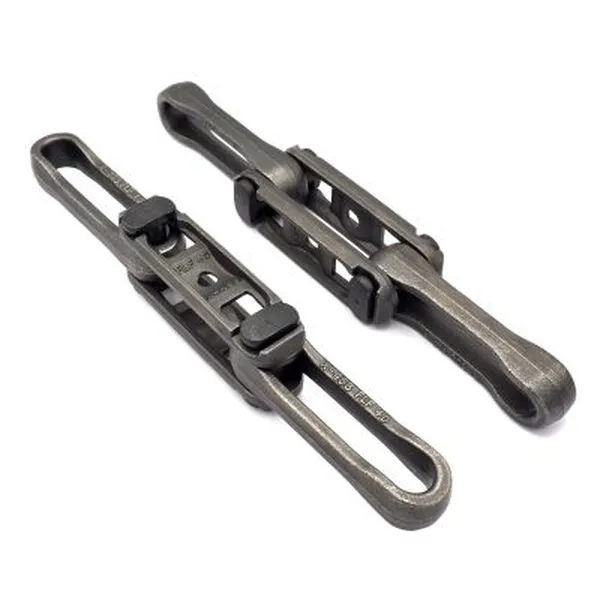
What are the advantages of using a slat conveyor chain?
A slat conveyor chain offers several advantages in material handling and conveying applications. Here are some key benefits:
1. Heavy-Duty Capacity:
– Slat conveyor chains are designed to handle heavy loads and can withstand rigorous industrial environments.
– They are commonly used in applications that require transporting large, bulky, or irregularly shaped items, such as automotive parts, pallets, or containers.
2. Flexibility:
– Slat chains can be customized and configured to suit specific conveying requirements. They are available in various widths, lengths, and chain configurations to accommodate different product sizes and shapes.
– The modular design of slat chains allows for easy modification or expansion of the conveyor system as production needs change.
3. Versatility:
– Slat chains can be used in both horizontal and inclined conveying applications. They are capable of moving products up or down slopes, making them suitable for production lines with varying elevations.
– These chains can be integrated with curves, turns, merges, and diverters to create complex conveying systems that optimize space utilization and product flow.
4. Durability and Longevity:
– Slat chains are typically made from robust materials such as steel or plastic, providing excellent durability and resistance to wear and tear.
– They can withstand demanding operating conditions, including high temperatures, corrosive environments, or exposure to chemicals.
5. Low Maintenance:
– Slat conveyor chains require minimal maintenance compared to other types of conveyor systems. They have fewer moving parts and typically operate with reduced friction.
– With proper lubrication and periodic inspection, slat chains can maintain their performance and reliability over an extended service life.
6. Easy Cleaning:
– The open design of slat chains allows for easy cleaning and debris removal. They are suitable for applications that require frequent sanitation or hygiene maintenance, such as in food processing or pharmaceutical industries.
Overall, using a slat conveyor chain offers the advantages of high load capacity, flexibility in design, versatility in conveying applications, durability, low maintenance requirements, and ease of cleaning. These features make slat chains an effective solution for various industries requiring efficient and reliable material handling.
What are the safety measures for working with heavy-duty conveyor chains?
Working with heavy-duty conveyor chains requires strict adherence to safety measures to protect the workers and maintain a safe working environment. Here are some important safety measures to consider:
1. Proper Training: All personnel involved in working with conveyor chains should receive comprehensive training on the safe operation and maintenance of the equipment. This includes understanding the potential hazards, safety procedures, and proper use of personal protective equipment (PPE).
2. Equipment Inspection: Regular inspection of the conveyor chain and associated components is crucial to identify any signs of wear, damage, or malfunction. This includes checking for loose fasteners, worn sprockets, misalignment, and any other potential hazards. Any issues should be addressed promptly to prevent accidents.
3. Lockout/Tagout: Before performing any maintenance or repair tasks on the conveyor chain, proper lockout/tagout procedures must be followed. This ensures that the equipment is de-energized and isolated from any power source to prevent accidental startup or movement.
4. Personal Protective Equipment (PPE): Workers should wear appropriate PPE, including safety glasses, gloves, steel-toed boots, and hearing protection. The specific PPE requirements may vary depending on the nature of the work and the potential hazards involved.
5. Safe Work Practices: Workers should follow safe work practices, such as avoiding loose clothing or jewelry that can get caught in the chain, keeping hands and clothing clear of moving parts, and using proper lifting techniques when handling heavy loads.
6. Emergency Stop Systems: Conveyor systems should be equipped with emergency stop buttons or pull cords that allow workers to quickly stop the chain in case of an emergency or hazardous situation.
7. Regular Maintenance: Scheduled maintenance and lubrication of the conveyor chain should be performed according to the manufacturer’s recommendations. This helps to ensure optimal performance and minimize the risk of unexpected failures.
8. Clear Warning Signs and Labels: Proper signage, warning labels, and safety instructions should be clearly displayed near the conveyor chain system to remind workers of potential hazards and safe operating procedures.
9. Regular Safety Training and Communication: Ongoing safety training and communication among the workforce are vital to reinforce safe practices and raise awareness of any changes or updates to safety protocols.
By implementing these safety measures and fostering a safety-conscious culture, the risks associated with working with heavy-duty conveyor chains can be minimized, ensuring the well-being of the workers and the efficient operation of the equipment.
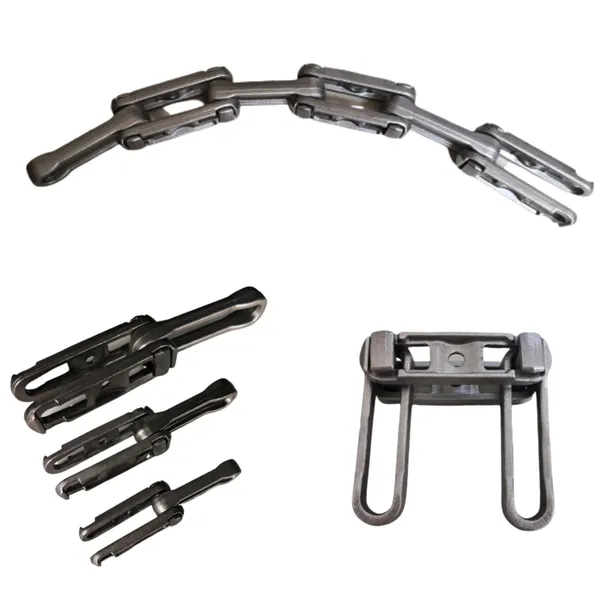
What are the noise levels associated with conveyor chains?
The noise levels associated with conveyor chains can vary depending on several factors:
1. Chain Type: Different types of conveyor chains produce varying noise levels. For example, roller chains tend to generate more noise compared to silent chains or plastic modular chains.
2. Speed: The speed at which the conveyor chain operates can influence the noise level. Higher speeds generally result in increased noise due to the impact and friction between the chain and other components.
3. Chain Condition: The condition of the conveyor chain plays a role in noise generation. Worn-out or improperly maintained chains can produce more noise due to increased friction and vibration.
4. Surrounding Environment: The noise levels can also be affected by the environment in which the conveyor system operates. Factors such as the presence of other machinery, acoustics of the facility, and noise insulation measures can impact the overall noise level.
5. Design and Components: The design of the conveyor system and the choice of components can influence noise levels. Factors such as the use of noise-reducing materials, proper alignment of components, and vibration dampening measures can help reduce noise.
It is important to note that excessive noise levels in the workplace can have adverse effects on the well-being of employees and may require noise control measures to comply with occupational health and safety regulations. Implementing noise reduction strategies like using noise-dampening materials, incorporating proper lubrication, maintaining chain tension, and applying vibration isolation techniques can help minimize the noise associated with conveyor chains.


editor by CX 2023-08-08