Product Description
Heavy Duty Conveyor Mineral Apron Feede Pan for crusher
| Material | Mn13Cr2/Mn18Cr2 |
| Hardness | GB/T 5680-2571 |
| Size | According to drawing, customize |
| Warranty | 1 year |
| Using Life | 100,000 batch |
| Competitve Advantage | Stable quality, Quick after-serive, On-time delivery |
Material requirement:
Global Standard:
| US | German | China | Australia | British | Japan |
| ASTM A128/A532 | GX 130 MnCr2 | GB/T 5680-2571 | AS2074 H1A/-H1B | BS3100/ BS4844 | SCMnH11 |
Product Description
Product Parameters
Material requirement:
Manufacture Process:
Company Introduction:
Company Profile
Company located in Xihu (West Lake) Dis. District, ZheJiang . It was founded on October,1995. From the beginning of its establishment, LXS has been engaged in the commitment to change the backwardness of the Chinese casting industry, which is large but weak. Our mission is to improve “Made in China to “Created/developed in China”. We realize technological innovations through producing and developing the high-end wear-resistant materials. By conducting extensive and in-depth investigations and researches, we take the CHINAMFG of becoming the world’s first-class enterprise in the high-end wear-resistant products field.
Through more than 20 years development, LXS has helped thousands clients for hundreds of milli testing projects and supplied our tailor-made products. We have successively entered 3 series of new wear-resist material markets of construction equipment, mining machine and grinding industry. We have designed and developed more than 10 thousands sorts of high-end wear-resistant parts for construction machinery, sanding and graveling equipment, cement and building materials equipment, power industry, metallurgy and marine machinery, etc., we supply high-end wear-resistant products for many CHINAMFG domestic and foreign customers.
We have repeatedly carried out continuous innovations through designing and testing more than 10 thousand varieties of products, obtained more than 70,000 test samples and hundreds of thousands of test data. Through the integration of independent R&D and production-research-application, we learn widely from professional advantages and complete our strengths from all available experts. By applying the laboratory economic mode of 1 institute, 2 bundries + scientific research universities/colleagues, we can systematically form a 5+3 scientific and techno innovation model. The core of this model is the long-term research on new materials, new processing, new products and new technologies in the genetic engineering material field, with the profound accumulation, we have been approved by ZheJiang Science and Technology Commission as “ZheJiang Wear-resistant Materials Engineering Center”.
Test:
| 1. Chemical Analysis |
| 2. Dimension Measurement |
| 3. Heat-Treatment Record |
| 4. Mechanical Property Test |
| 5. Hardness Test |
| 6. PT Test |
Workshop & Inspection:
High capacity and strict quality control
Packaging & Shipping
FAQ
Q:Are you a factory or trading company?
A: We are a factory to manufacture high chrome, steel, maganese product for almost 30 years.
Q:Do you have strong experience on manufacture and installation?
A: Yes, definitely. We do have strong technicals and manufacture ablity. Our customers are world wide famous user, we have over 10 years stable business relationship.
Q:How’s your quality?
A: Currently, we are the best quality supplier in Chinese market. Our feedback from customer is very good, no complain from domestic and international customers.
Q: What is the delivery time?
A: According to order items, basically our general manufacture period is 55 days once downpayment received.
Q: Payment method?
A: (i) 30% downpayment, 70% payment before order finish.
(ii) Min. order quantity: 1 piece.
(iii) Transportation: By air, sea, train.
Q: How to get correc product quotation?
A: Provide part number or key size or machinery series number
/* January 22, 2571 19:08:37 */!function(){function s(e,r){var a,o={};try{e&&e.split(“,”).forEach(function(e,t){e&&(a=e.match(/(.*?):(.*)$/))&&1
| Application: | Machinery Parts |
|---|---|
| Machining: | M/C Machining |
| Material: | High Manganese Steel |
| Surface Treatment: | Polishing |
| Design: | 3D |
| Casting Tolerance: | +/-0.5mm |
| Samples: |
US$ 1.4/kg
1 kg(Min.Order) | |
|---|
| Customization: |
Available
| Customized Request |
|---|
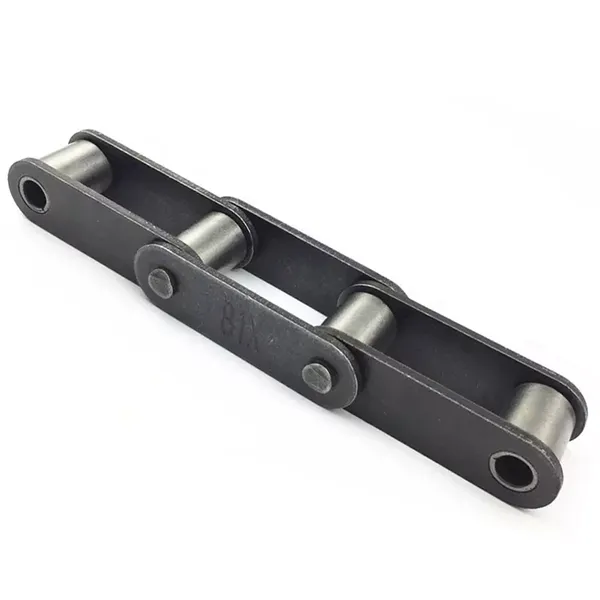
How does a conveyor chain handle inclined or declined conveyance?
A conveyor chain is designed to handle various types of conveyance, including inclined or declined applications. Here’s how a conveyor chain handles these situations:
1. Inclined Conveyance: When a conveyor system is required to move materials uphill, an inclined conveyor chain is used. The chain’s design includes special attachments or cleats that provide additional grip and prevent material from slipping or sliding backward. These attachments are strategically positioned along the chain to ensure effective conveyance on inclines.
2. Declined Conveyance: For conveyors that move materials downhill, a declined conveyor chain is utilized. Similar to inclined conveyance, the chain may have specialized attachments or cleats that help control the speed and prevent material from sliding too quickly. These attachments keep the material in place and ensure a controlled and efficient flow downward.
Both inclined and declined conveyance require careful consideration of the chain’s design, including the type and arrangement of attachments. The size, shape, and weight of the conveyed material also play a role in determining the appropriate chain configuration. It’s important to consult with conveyor chain manufacturers or experts to select the right chain and attachments for specific inclined or declined applications.
What are the future trends and advancements in conveyor chain technology?
The field of conveyor chain technology is constantly evolving, driven by the need for improved efficiency, productivity, and sustainability. Here are some of the future trends and advancements in conveyor chain technology:
1. Automation and robotics: The integration of conveyor chains with automation and robotics systems is a growing trend. This includes the use of advanced sensors, machine vision, and artificial intelligence to enable autonomous operation, precise positioning, and efficient material handling.
2. Smart and connected systems: Conveyor chains are becoming increasingly connected through the Internet of Things (IoT) technology. This allows for real-time monitoring, data collection, and analysis of various performance parameters such as chain wear, tension, temperature, and energy consumption. Smart systems can optimize maintenance schedules, detect potential failures, and improve overall system efficiency.
3. Lightweight and high-strength materials: The development of lightweight yet high-strength materials is an ongoing focus in conveyor chain technology. Advanced alloys, composites, and engineered plastics offer improved strength-to-weight ratios, reducing energy consumption and increasing the load capacity of conveyor systems.
4. Energy efficiency: Energy efficiency is a key consideration in conveyor chain design. Future advancements aim to minimize power consumption through the use of efficient drive systems, regenerative braking, and smart control algorithms that optimize speed and acceleration profiles. Energy recovery technologies, such as regenerative drives, can also capture and reuse energy during deceleration or braking.
5. Sustainability and environmental friendliness: Conveyor chain technology is moving towards more sustainable and environmentally friendly solutions. This includes the use of eco-friendly materials, improved lubrication techniques to minimize environmental impact, and the adoption of energy-efficient components and systems. Recycling and circular economy concepts are also gaining prominence in the design and manufacturing of conveyor chains.
6. Advanced wear monitoring and predictive maintenance: The future of conveyor chain technology involves advanced wear monitoring systems that can accurately predict the remaining useful life of chains and components. This enables proactive maintenance planning and reduces unplanned downtime. Predictive maintenance algorithms analyze data collected from sensors and provide timely alerts for chain replacement or repair.
These are just a few examples of the future trends and advancements in conveyor chain technology. As technology continues to advance, we can expect further innovations that enhance performance, efficiency, reliability, and sustainability in conveyor systems.
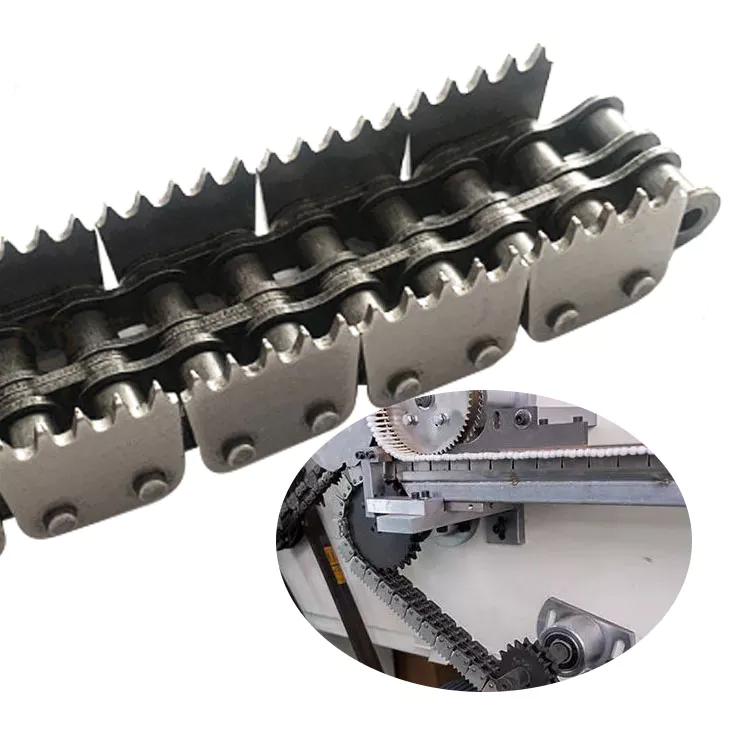
How do you properly tension a conveyor chain?
Properly tensioning a conveyor chain is crucial for its smooth operation and to prevent issues like chain slipping or excessive wear. Here are the steps to properly tension a conveyor chain:
- Identify the Tensioning Points: Determine the locations where the conveyor chain can be tensioned. These are typically at the ends of the chain or at specific tensioning devices.
- Loosen the Tensioning Devices: If there are tensioning devices in place, such as adjustable bolts or tensioning screws, loosen them to allow for adjustment.
- Apply Tension: Apply tension to the conveyor chain by either manually pulling the chain or using a tensioning tool. The amount of tension required depends on the chain type and the manufacturer’s recommendations.
- Check the Tension: Use a tension gauge or other suitable method to measure the tension of the conveyor chain. The tension should fall within the specified range provided by the chain manufacturer.
- Adjust the Tension: If the tension is too loose or too tight, make adjustments accordingly. Tighten or loosen the tensioning devices until the desired tension is achieved.
- Secure the Tensioning Devices: Once the proper tension is achieved, securely tighten the tensioning devices to hold the chain in place.
- Verify the Tension: After tensioning the chain, perform a visual inspection and run the conveyor to ensure the chain runs smoothly without excessive slack or tightness. Make any further adjustments if necessary.
It’s important to refer to the specific guidelines provided by the conveyor chain manufacturer for proper tensioning instructions, as the exact method may vary depending on the chain type and design. Regularly check the tension of the conveyor chain and make adjustments as needed to maintain optimal performance.


editor by CX 2024-04-29