Product Description
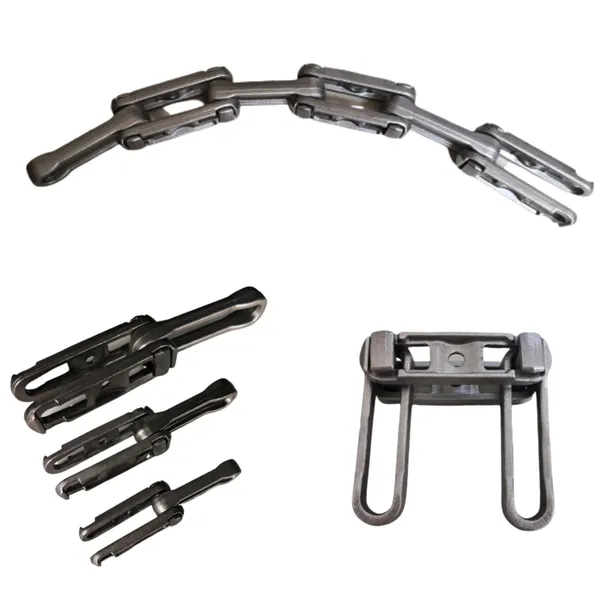
Drop Forged Chains “Y” Serial
FEATURES
• It consists of forged steel links, which can be equipped with various plastic or steel scrapers. The connection pin between these links is in a circlip version.
• Special heat treated alloy steel,drop forged and precision machined, with case hardened.
• High strength, strong load-carrying capability.
• Extremely hard exterior surface and superior wear
resistance.
TECHNICAL SPECIFICATIONS
| Model | P (mm) |
H (mm) |
B (mm) |
D (mm) |
b (mm) |
T (mm) |
Breaking Load (Min.) |
Material |
| P100 | 100 | 30 | 33 | 14 | 15.5 | 13 | 140KN | 40Cr |
| P125-B | 125 | 35 | 34 | 17 | 17 | 8 | 150KN | 40Cr |
| P142 | 142 | 50.8 | 43 | 25 | 19 | 12.2 | 180KN | 20CrMnTi |
| 300KN | 40Cr | |||||||
| P142H | 142 | 50 | 62 | 25 | 29 | 15 | 280KN | 20CrMnTi |
| 460KN | 40Cr | |||||||
| P160 | 160 | 40 | 48 | 20 | 22.5 | 20 | 240KN | 40Cr |
| P200 | 200 | 64 | 50 | 32 | 23 | 15 | 390KN | 40Cr |
| P200-E | 200 | 45 | 42 | 20 | 20 | 12.2 | 200KN | 40Cr |
Note: Customised sizes and material are available CZPT request
Roller Conveyor Chains
FEATURES
• It consists of a combination of inner and outer links.
• The bush/pin connections between the links are available in a circlip, split pin, or a riveted version.
• The steel scrapers can be either bent or welded.
• UHMWPE lights are suggested to attach to the scrapers for more eficiency and high wear resistance.
GLF Type
TECHNICAL SPECIFICATIONS
| Model | Pitch (P) |
Scraper Distance (P1) |
Inner Width (b) |
Plate Width (B) |
T1 | T2 | Roller Dia. (D) |
Bush Dia. (D2) |
Pin Dia (D1) |
Chain Width (L) |
E1 | E2 | Number of Holes (n) |
d | Breaking Load in KN (Min.) |
| GLF66.675 (6)D×182 |
66.675 | 266.7 | 26 | 30 | 6 | 6 | 22.23 | 12.7 | 182 | 90 | 150 | 4 | 9 | 130 | |
| GLF66.675 (6)D×215 |
66.675 | 266.7 | 26 | 30 | 6 | 6 | 22.23 | 12.7 | 215 | 95 | 195 | 4 | 9 | 130 | |
| GLF66.675 (6)D×295 |
66.675 | 266.7 | 26 | 30 | 6 | 6 | 22.23 | 12.7 | 295 | 95 | 195 | 4 | 9 | 130 | |
| GLF100 (6)D×170 |
100 | 200 | 38 | 40 | 6 | 6 | 36 | 21.6 | 16 | 170 | 115 | 2 | 9 | 220 | |
| GLF100 (6)D×225 |
100 | 200 | 38 | 40 | 6 | 6 | 36 | 21.6 | 16 | 225 | 104 | 194 | 4 | 9 | 220 |
| GLF100 (6)D×294 |
100 | 200 | 38 | 40 | 6 | 6 | 36 | 21.6 | 16 | 294 | 115 | 245 | 4 | 9 | 220 |
| GLF100 (5)×225 |
100 | 200 | 28 | 30 | 5 | 5 | 22.23 | 14.27 | 225 | 95 | 195 | 4 | 9 | 90 | |
| GLF125 (8)D×285 |
125 | 500 | 50 | 50 | 8 | 8 | 32 | 19.9 | 285 | 155 | 255 | 4 | 9 | 220 | |
| GLF125 (6)×235 |
125 | 250 | 32.5 | 40 | 6 | 6 | 28.58 | 20 | 14.27 | 235 | 95 | 195 | 4 | 9 | 170 |
| GLF160 (6)×290 |
160 | 320 | 27 | 45 | 6 | 6 | 32 | 20 | 14.27 | 290 | 193 | 2 | 9 | 193 |
GLR Type
TECHNICAL SPECIFICATIONS
| Model | Pitch (P) |
Scraper Distance (P1) |
Inner Width (b) |
Plate Width (B) |
T1 | T2 | Roller Dia. (D) |
Bush Dia. (D2) |
Pin Dia (D1) |
Chain Width (L) |
E1 | E2 | Number of Holes (n) |
d | Breaking Load in KN (Min.) |
| GLR66.675 | 66.675 | 266.7 | 27.5 | 30 | 6 | 6 | 24 | 13 | 130 | 102 | 32 | 4 | 9 | 90 | |
| GLR100 | 100 | 200 | 38 | 40 | 6 | 6 | 36 | 21.6 | 16 | 130 | 102 | 32 | 4 | 9 | 220 |
Other products of our conveyor parts:
Could you please send me inquiry for details?
| Material: | Steel |
|---|---|
| Structure: | Roller Chain |
| Surface Treatment: | Oxygenation |
| Transport Package: | Pallet |
| Specification: | GLF, GLR |
| Trademark: | Yutung |
| Samples: |
US$ 10/Piece
1 Piece(Min.Order) | |
|---|
| Customization: |
Available
| Customized Request |
|---|
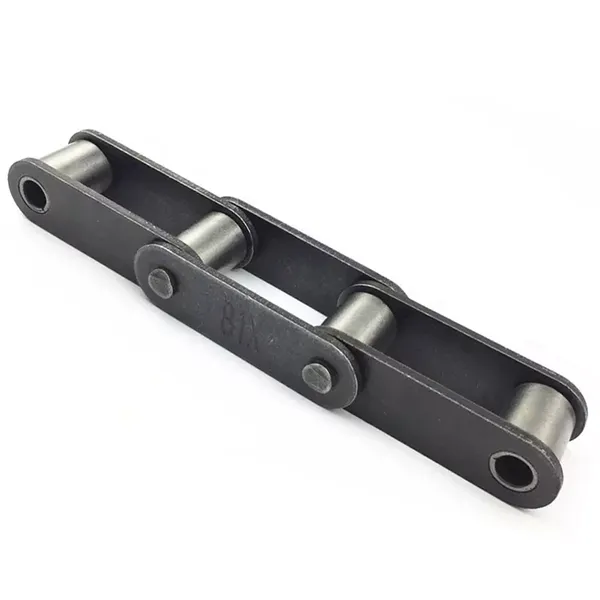
How does a conveyor chain handle inclined or declined conveyance?
A conveyor chain is designed to handle various types of conveyance, including inclined or declined applications. Here’s how a conveyor chain handles these situations:
1. Inclined Conveyance: When a conveyor system is required to move materials uphill, an inclined conveyor chain is used. The chain’s design includes special attachments or cleats that provide additional grip and prevent material from slipping or sliding backward. These attachments are strategically positioned along the chain to ensure effective conveyance on inclines.
2. Declined Conveyance: For conveyors that move materials downhill, a declined conveyor chain is utilized. Similar to inclined conveyance, the chain may have specialized attachments or cleats that help control the speed and prevent material from sliding too quickly. These attachments keep the material in place and ensure a controlled and efficient flow downward.
Both inclined and declined conveyance require careful consideration of the chain’s design, including the type and arrangement of attachments. The size, shape, and weight of the conveyed material also play a role in determining the appropriate chain configuration. It’s important to consult with conveyor chain manufacturers or experts to select the right chain and attachments for specific inclined or declined applications.
How does lubrication affect the performance of a conveyor chain?
Lubrication plays a crucial role in the performance and longevity of a conveyor chain. Proper lubrication helps to reduce friction, wear, and heat generation, ensuring smooth operation and minimizing the risk of premature failure. Here’s how lubrication affects the performance of a conveyor chain:
1. Friction Reduction: Lubrication forms a thin film between the chain components, reducing friction between metal surfaces. This reduces the energy required for operation, minimizes heat generation, and prevents excessive wear and tear.
2. Wear Prevention: Lubrication forms a protective layer on the chain components, preventing direct metal-to-metal contact. This helps to reduce wear and extend the service life of the chain.
3. Corrosion Protection: Lubricants often contain anti-corrosion additives that protect the chain from rust and oxidation. This is particularly important in environments with high humidity or exposure to corrosive substances.
4. Noise Reduction: Proper lubrication reduces the noise generated during chain operation by minimizing friction and metal-to-metal contact. This can contribute to a quieter and more comfortable working environment.
5. Temperature Control: Lubrication helps to dissipate heat generated during chain operation, preventing excessive temperature rise. This is crucial in high-speed or heavy-duty applications where heat can lead to accelerated wear and reduced chain performance.
6. Maintenance and Service Life: Regular lubrication and proper lubricant selection are essential for maintaining the chain’s performance and extending its service life. Adequate lubrication reduces the need for frequent maintenance, minimizes downtime, and lowers overall operating costs.
It’s important to follow the manufacturer’s recommendations for lubrication frequency and use the appropriate lubricant for the conveyor chain. Regular inspections and maintenance checks should also be conducted to ensure proper lubrication levels and address any issues promptly. Proper lubrication practices will enhance the performance, reliability, and durability of the conveyor chain system.
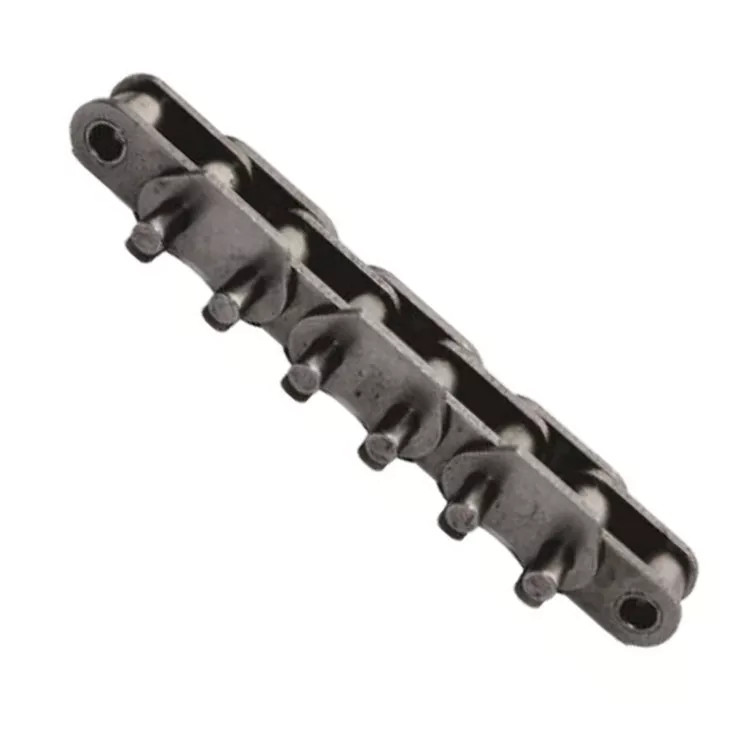
Can a conveyor chain be repaired or does it need to be replaced entirely?
In general, conveyor chains can be repaired in certain cases, but there are instances where replacement is necessary. Here are some considerations:
- Minor Damage: If the conveyor chain has minor damage, such as a broken link or a damaged pin, it may be possible to repair it by replacing the damaged components.
- Significant Wear: If the chain has significant wear, such as elongation or excessive corrosion, it may be more cost-effective to replace the entire chain rather than attempting repairs.
- Critical Components: Some conveyor chains have critical components that cannot be repaired, such as welded attachments or specialized features. In such cases, replacement is usually the only option.
- Manufacturer’s Recommendations: It’s important to consult the manufacturer’s recommendations regarding chain repairability. They can provide specific guidelines on when repair is feasible and when replacement is necessary.
Before deciding whether to repair or replace a conveyor chain, it’s recommended to assess the extent of damage, consider the overall condition of the chain, and evaluate the cost-effectiveness of each option. It’s always advisable to consult with a qualified professional or the chain manufacturer to determine the best course of action.


editor by CX 2023-08-10